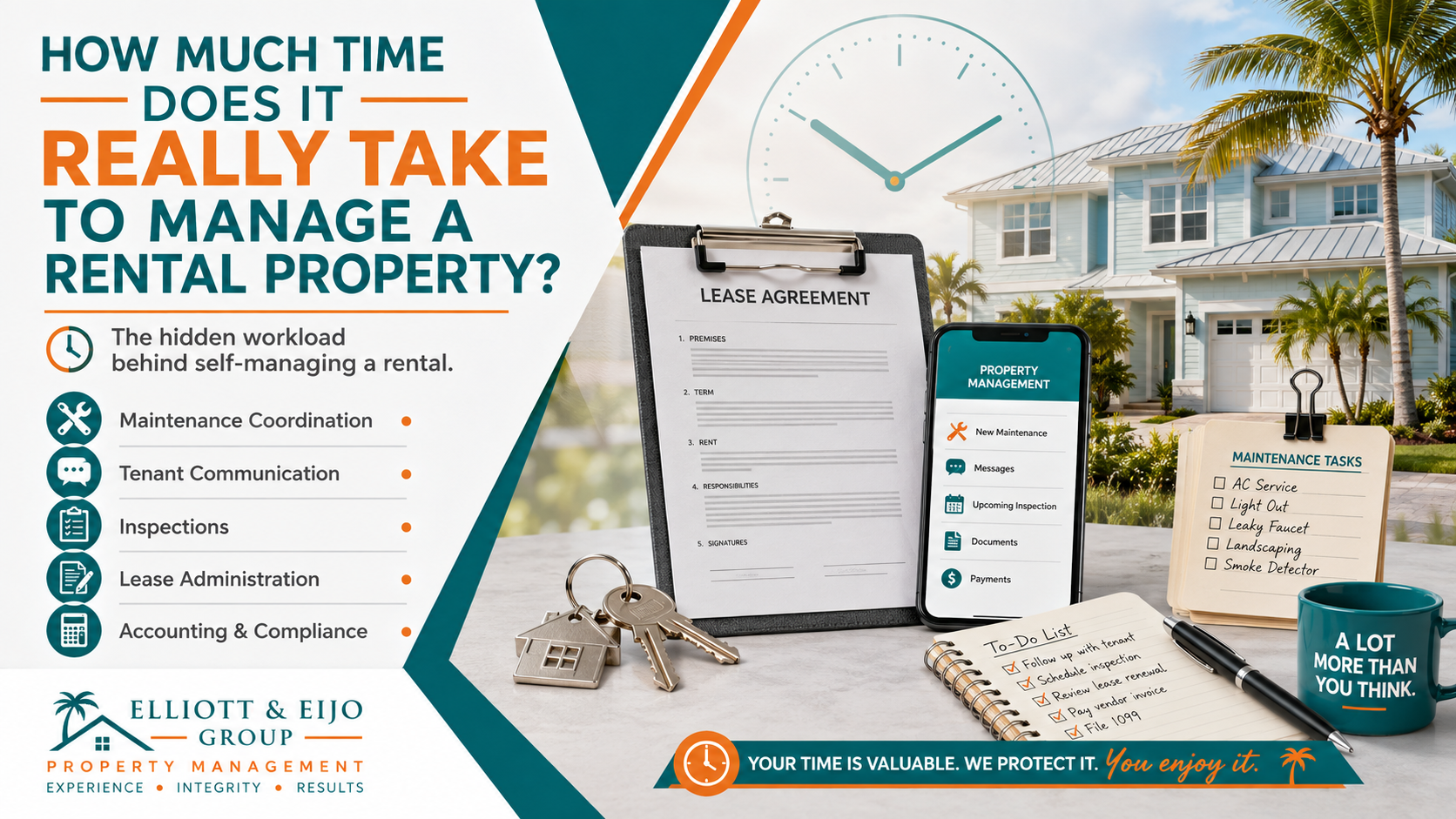
How Much Time Does It Really Take to Manage a Rental Property?
Owning rental property can be a great way to build long-term wealth.
But there is one cost many investors underestimate:
Time.
Most rental property owners think about the obvious financial numbers first.
Purchase price. Mortgage payment. Taxes. Insurance. Rent. Maintenance. Cash flow.
Those are all important.
But managing a rental property properly also requires time, organization, follow-up, documentation, decision-making, and a surprising amount of coordination.
And for many self-managing landlords, what started as an investment can slowly begin to feel like a second job.
Rental Property Management Is More Than Collecting Rent
From the outside, rental management can seem pretty simple.
Find a tenant. Collect the rent. Fix things when they break.
In reality, there are dozens of responsibilities that happen behind the scenes throughout a tenancy.
A rental property owner may need to manage:
- Advertising and marketing
- Showing coordination
- Applicant screening
- Lease preparation
- Move-in documentation
- Tenant communication
- Rent collection
- Maintenance requests
- Vendor scheduling
- Repair follow-up
- Property inspections
- HOA compliance
- Lease enforcement
- Notices
- Accounting
- Security deposit documentation
- Lease renewals
- Move-out inspections
- Turnover repairs
- Preparing the property for the next tenant
And that is when everything is going relatively smoothly.
Add a late payment, broken air conditioner, plumbing leak, difficult tenant, insurance claim, HOA violation, after-hours maintenance issue, or unexpected vacancy and the amount of time involved can increase very quickly.
Maintenance Alone Can Consume More Time Than You Expect
Maintenance is one of the biggest areas where rental owners underestimate the workload.
A tenant reports that the air conditioner isn't cooling.
That sounds like one maintenance request.
But managing that request properly could involve:
- Receiving and documenting the tenant's report
- Asking troubleshooting questions
- Determining whether the issue is urgent
- Contacting the appropriate vendor
- Coordinating access with the tenant
- Reviewing the vendor's diagnosis
- Approving the repair
- Communicating with the owner or tenant
- Confirming the work was completed
- Reviewing and paying the invoice
- Documenting the repair for future reference
One maintenance request can involve multiple phone calls, emails, text messages, and follow-ups.
Now multiply that across an entire year.
Routine maintenance, preventative maintenance, appliance problems, plumbing issues, HVAC service, electrical repairs, landscaping, pest control, and tenant-caused damage can quickly add up.
That is why having an organized maintenance process matters.
Preventative Maintenance Requires Planning Too
Good rental management shouldn't only respond when something breaks.
Preventative maintenance can help catch smaller issues before they become expensive repairs.
That can include things such as:
- HVAC servicing
- Changing or delivering air filters
- Inspecting plumbing fixtures
- Checking for leaks
- Reviewing roof and exterior condition
- Testing smoke and carbon monoxide detectors
- Monitoring water heaters
- Inspecting caulking and moisture-prone areas
- Checking doors, windows, and locks
- Reviewing landscaping and drainage
- Watching for signs of pests
- Identifying deferred maintenance
Preventative maintenance takes coordination, but it can also help reduce the likelihood of larger problems later.
A small leak found early is usually much easier to deal with than water damage that has been developing for six months.
Tenant Communication Is an Ongoing Responsibility
Tenants don't only communicate when rent is due.
Throughout a tenancy, owners may receive questions about:
- Maintenance
- Lease terms
- Rent payments
- HOA rules
- Parking
- Pets
- Assistance animals
- Guests
- Renewals
- Repairs
- Utility issues
- Access to the property
- Neighbor complaints
- Property condition
Some issues are simple.
Others require research, documentation, careful wording, and follow-up.
And communication doesn't always happen during convenient business hours.
For a self-managing owner, one of the biggest frustrations can be never knowing when the next call or message is coming.
Professional management creates a buffer between the owner and the day-to-day communication that comes with operating a rental.
Inspections Take More Than Walking Through the Property
Regular inspections are an important part of protecting a rental investment.
But a useful inspection is more than walking through the house and saying everything looks okay.
A good inspection process should help identify:
- Deferred maintenance
- Lease violations
- Unauthorized occupants
- Unauthorized animals
- Water leaks
- Moisture concerns
- HVAC issues
- Smoke detector concerns
- Exterior deterioration
- Landscaping problems
- General property condition
The inspection should also be documented.
That may involve photographs, written notes, follow-up maintenance requests, tenant communication, and recommendations to the owner.
Inspections are most valuable when they are part of an organized system rather than something done only when there appears to be a problem.
Lease Administration Creates Its Own Workload
A lease is not something you sign once and forget about.
Throughout the tenancy, there may be:
- Lease amendments
- Renewal decisions
- Rent adjustments
- Notices
- HOA updates
- Tenant requests
- Insurance documentation
- Pet or assistance animal changes
- Occupancy changes
- Lease violations
Then there is the renewal process.
Owners need to consider current market rent, tenant performance, property condition, renewal timing, and the cost of a possible vacancy.
If the tenant doesn't renew, an entirely new process begins.
Turnover Can Become a Full-Time Project
When a tenant moves out, there is often a narrow window to inspect the property, complete repairs, prepare it for marketing, and find the next tenant.
That may involve:
- Move-out inspection
- Damage documentation
- Security deposit review
- Cleaning
- Painting
- Flooring
- Landscaping
- Maintenance repairs
- Rekeying
- Vendor coordination
- Photography
- Advertising
- Showing appointments
- Applicant screening
- Preparing the new lease
- New tenant move-in
Every day the property remains vacant can represent lost rental income.
That means the owner is balancing two goals at the same time:
Get the property ready quickly.
And:
Make sure the work is done correctly.
That takes coordination.
Compliance Adds Another Layer
Managing rental property also means operating within landlord-tenant laws, Fair Housing requirements, local ordinances, HOA rules, lease requirements, and other regulations.
The rules can affect areas such as:
- Rental advertising
- Applicant screening
- Assistance animals
- Security deposits
- Property access
- Notices
- Lease enforcement
- Maintenance obligations
- Move-out procedures
Even experienced landlords need systems to keep these responsibilities organized.
The challenge for a self-managing owner is that property management isn't usually their full-time profession.
They may be managing these issues while also working another job, running a business, raising a family, traveling, or managing other investments.
Then There Is the Accounting
Rental property generates a steady stream of financial activity.
Rent.
Deposits.
Vendor bills.
Owner expenses.
Management expenses.
HOA charges.
Utilities.
Maintenance.
Insurance.
Taxes.
Keeping accurate records matters.
Good rental accounting helps owners understand how the property is actually performing and makes tax preparation much easier.
Without a system, it is easy for receipts, invoices, and transactions to become scattered across email accounts, credit cards, bank accounts, and filing folders.
What Is Your Time Worth?
This is the question rental owners often overlook.
Imagine you spend just five hours per month managing your rental.
That is 60 hours per year.
At ten hours per month, it becomes 120 hours.
And those hours don't necessarily happen when you want them to.
A maintenance request doesn't care that you're at dinner.
A tenant issue doesn't care that you're on vacation.
An air conditioner doesn't schedule its breakdown around your calendar.
That is why the true cost of self-management isn't only measured in dollars.
It is also measured in time, interruptions, stress, and opportunity cost.
Could That Time Be Better Spent Somewhere Else?
For some owners, self-management makes sense.
They enjoy being involved, live near the property, have reliable vendors, understand the rules, and have enough time to manage everything themselves.
For others, those hours could be better spent:
- Growing their business
- Spending time with family
- Traveling
- Finding their next investment
- Managing their career
- Building another income stream
- Simply enjoying their free time
Real estate is supposed to be an investment.
It doesn't necessarily need to become your second occupation.
Professional Property Management Is About Leverage
One of the biggest advantages of professional property management is leverage.
Instead of one owner trying to handle every responsibility, a professional management company can provide access to:
- Leasing specialists
- Maintenance coordinators
- Accounting systems
- Screening processes
- Property inspection procedures
- Vendor relationships
- Lease administration
- Documentation systems
- Tenant communication
- Property management technology
The owner still owns the investment and makes the important decisions.
But the day-to-day execution is handled by a team.
That can make owning rental property much more manageable.
Experience and Systems Matter
At Elliott & Eijo Group, property management is not built around one person trying to do everything.
Our team uses specialized staff, technology, established processes, and hands-on oversight to manage the many moving parts that come with rental property ownership.
That includes areas such as:
- Marketing
- Leasing
- Tenant screening
- Maintenance coordination
- Inspections
- Tenant communication
- Lease administration
- Accounting
- Renewals
- Move-outs
- Property documentation
Having systems in place helps keep important responsibilities from falling through the cracks.
And just as importantly, it gives owners back something that is difficult to replace:
Their time.
Professional Management May Cost Less Than You Think
One reason some owners hesitate to hire a property manager is the assumption that professional management will eliminate too much of their rental income.
But the real comparison shouldn't simply be:
“What does property management cost?”
A better question is:
“What am I getting in exchange for that cost?”
Professional management can provide:
- Time savings
- Vendor coordination
- Tenant communication
- Professional screening
- Documentation
- Inspections
- Accounting
- Lease administration
- Compliance processes
- Reduced day-to-day involvement
It can also help owners avoid some of the costly mistakes that come from inconsistent processes, poor documentation, delayed maintenance, or improperly handled tenant issues.
For many investors, professional management becomes another operating expense that allows the investment to function without requiring the owner to personally handle every task.
Make Your Rental Property Work for You
Rental property can be a powerful long-term investment.
But owning real estate shouldn't mean sacrificing every evening, weekend, or vacation to deal with tenants, repairs, vendors, and paperwork.
The goal should be to build an investment that works for you—not one that constantly demands your attention.
At Elliott & Eijo Group, our goal is simple:
Help make owning rental property easier, more organized, and more efficient.
Whether you own your first rental property or are continuing to build a larger portfolio, having the right systems and team behind your investment can make a significant difference.
If you'd like to learn more about our property management services and see whether professional management makes sense for your rental, we'd be happy to talk.
View Our Property Management Pricing:
https://www.mylakelandhome.com/pricing
Elliott & Eijo Group at S&D Real Estate Services, LLC
(863) 333-5161
This article is provided for general educational and informational purposes only. Property management needs, expenses, rental performance, and legal requirements vary by property and individual circumstances.