


What is consideredWear & Tear
We are committed to our property owners and their investments and will do everything in accordance with the laws to make the proper claims on tenant security deposits to avoid costly litigation.
In order to comply with the Florida Judicial Law and HUD Guidelines, the below items are a reference to items that are considered to be normal wear & tear and tenant negligent damages.
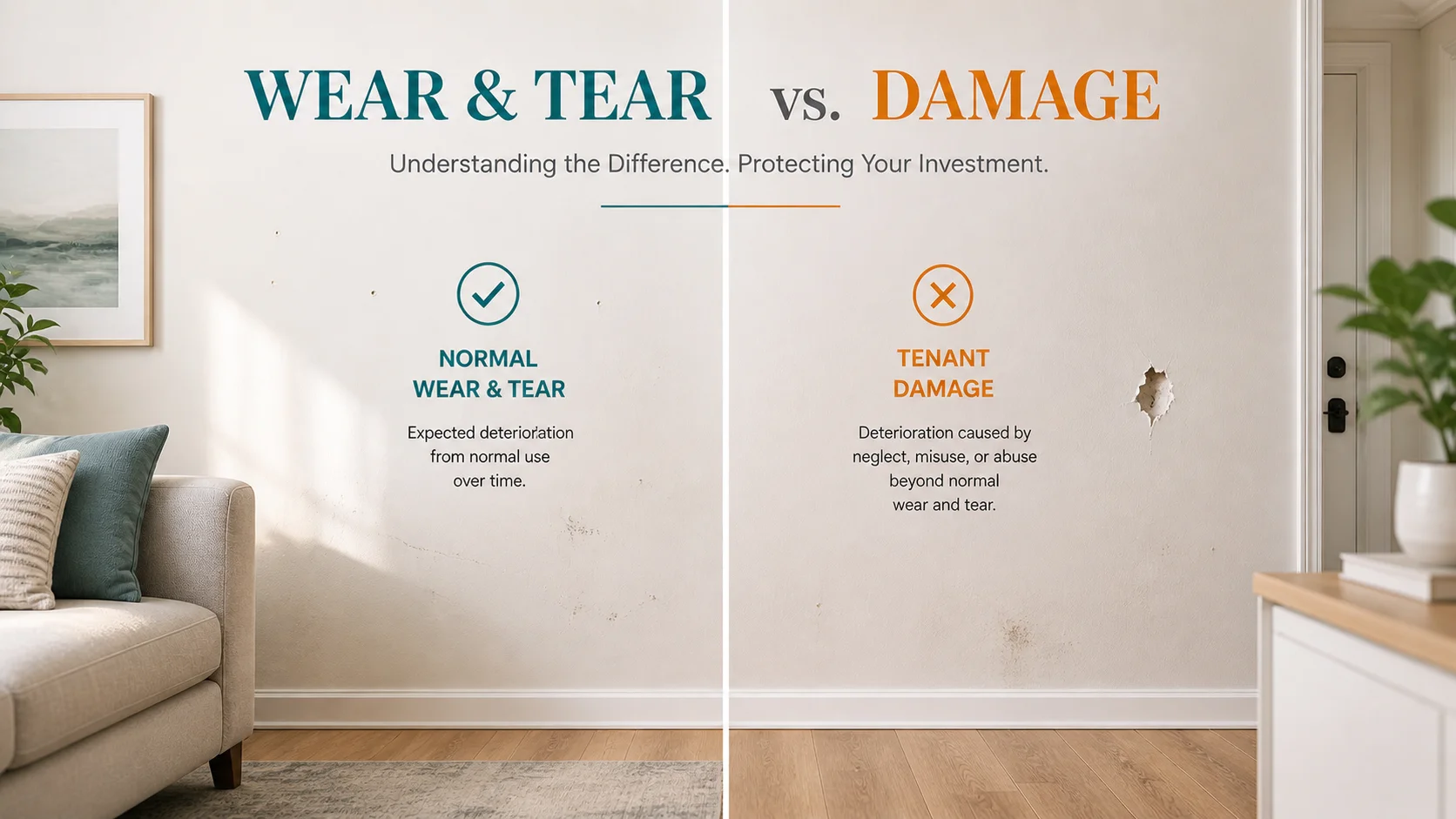
Wear & Tear vs. Damages
This document is meant to provide a general overview of the difference between wear and tear vs damage when doing a security deposit return.
Security deposits can be used to repair damage for which a resident is responsible. However, the landlord cannot apply the security deposit to normal wear and tear.
The question is: “What’s the difference?”
NORMAL WEAR AND TEAR DEFINED
The legal definition of “normal wear and tear” as stated in the Florida Real Estate Commission manual and defined by the Department of Housing and Urban Development (HUD).
“Normal wear and tear means that deterioration which occurs, based upon the use for which the rental unit is intended, without negligence, carelessness, accident, or abuse of the premises or equipment or chattels by the tenant or members of his household, or their invitees or guests.”
Damage can therefore be defined as deterioration which occurs due to negligence, carelessness, accident, or abuse of the premises or equipment or chattels by the tenant or member of their household, or their invitees or guests.
The following is a list of examples and is intended as a guide to reasonable interpretation of the differences between expected ‘wear and tear’ from normal residential use and irresponsible, intentional, or unintentional actions that cause damage to a landlord’s property.
Courts have also ruled that the length of time a tenant has occupied a property must also be taken into consideration when accessing damages in relation to deductions to a tenant’s security deposit, as well as the average life expectancy of the item.
The longer a resident has resided in a property, the more allowance must be given for ‘wear and tear’ over damage.
We have included a list of items below that HUD has provided as examples of Normal Wear & Tear vs. Damages in Appendix 5C.
EXAMPLES (Not all inclusive) of TENANT DAMAGE versus “NORMAL WEAR AND TEAR”
Normal costs of turning over an apartment after a tenant vacates may not be included on a claim to HUD for tenant damages. The costs an owner incurs for the basic cleaning and repairing of such items necessary to make a unit ready for occupancy by the next tenant are part of the costs of doing business. The following is a list of items typically attributable to routine use or “normal wear and tear”.
Normal Wear and Tear
- Fading, peeling, or cracked paint
- Slightly torn or faded wallpaper
- Small chips in plaster
- Nail holes, pin holes, or cracks in wall
- Door sticking from humidity
- Cracked window pane from faulty foundation or building settling
- Floors needing coat of varnish
- Carpet faded or worn thin from walking
- Loose grouting and bathroom tiles
- Worn or scratched enamel in old bathtubs, sinks, or toilets
- Rusty shower rod
- Partially clogged sinks caused by aging pipes
- Dirty or faded lamp or window shades
Tenant damages usually require more extensive repair, and at greater cost than “normal wear and tear”, and are often the result of a tenant’s abuse or negligence that is above and beyond normal wear and tear.
Tenant Damage
- Gaping holes in walls or plaster
- Drawings, crayon markings, or wallpaper that owner did not approve
- Seriously damaged or ruined wallpaper
- Chipped or gouged wood floors
- Doors ripped off hinges
- Broken windows
- Missing fixtures
- Holes in ceiling from removed fixtures
- Holes, stains, or burns in carpet
- Missing or cracked bathroom tiles
- Chipped and broken enamel in bathtubs and sinks
- Clogged or damaged toilet from improper use
- Missing or bent shower rods
- Torn, stained, or missing lamp and window shades
Life Expectancy Chart
Many major items have a predictable life span. A list of items and their life expectancy are listed below:
| Item | Lifespan |
|---|---|
| Hot Water Heaters | 10 Years |
| Carpeting | 5 Years |
| Air Conditioning | 10 Years |
| Ranges | 20 Years |
| Refrigerators | 10 Years |
| Interior Painting | 3 Years |
| Tiles/Linoleum | 5 Years |
| Window shades, screens, blinds | 3 Years |
Additional Examples
| Wear & Tear | Damages |
|---|---|
| Small nail holes caused by a 6 penny nail or smaller. A 6 penny nail is 2 inches long and is used for hanging picture frames and other items on walls | Large holes from hanging shelving, pictures, screws, wall anchors, flat screen television brackets or any other wall hanging that causes damage larger than a 6 penny nail |
| Faded paint | Spot painting and patching or touch up painting of any kind that doesnt match and paint is within life expectancy |
| Faded caulking around the bathtub and tiles | Missing caulking around the bathtub and tiles |
| Hard water deposits | Buildup of dirt, mold, mildew or water stains from a preventable or unreported water leak or drip |
| Loose or stubborn door lock | Broken or missing locks |
| Loose hinges or handles on doors | Damage from a door from forced entry or damage from using feet to open doors |
| Worn carpet traffic patterns | Torn, burned, stained, missing, ripped, scratched, or snagged carpet, pet damage and flooring is within life expectancy |
| Faded finish on wood floors | Scratched, gouged, warped or water damaged wood floors |
| Linoleum worn thin | Linoleum with tears, chips or holes and is within life expectancy |
| Worn countertops due to daily use | Burned, cut, stained, scratched or water damaged countertops |
| Drywall cracks from settling | Holes in walls, doors, screens or windows from misuse, negligence, carelessness, accident or abuse |
| Faded, chipped or cracked paint | Unapproved or poor tenant paint job and paint is within life expectancy |
| Loose or slightly torn wallpaper | Severely torn or marked-up wallpaper |
| Worn or heat blistered mini-blinds | Broken, bent, cracked or missing slats, wands, hardware & broken strings |
| Dirty window and door screens | Torn or missing screens |
| Sticky window, window that wont stay up | Broken window pane |
| Loose or inoperable faucet handle | Broken or missing faucet handle |
| Running toilet | Broken toilet seat, tank top or chipped or cracked toilet bowl |
| Musty odor | Urine or pet odor throughout unit |
| Closet bi-fold door off track | Damaged or missing bi-fold door |
| Non-functioning smoke or CO detector | Missing or detached smoke detector or CO detector or missing batteries |
| Dry lawn | Lawn with pet urine spots, dead areas, excessive weeds |
| Non-functioning light fixture | Missing, burnt out, or incorrect style light bulbs |
| Slow draining drains | Drains that are clogged by hair, toys, or other non-flushable objects |