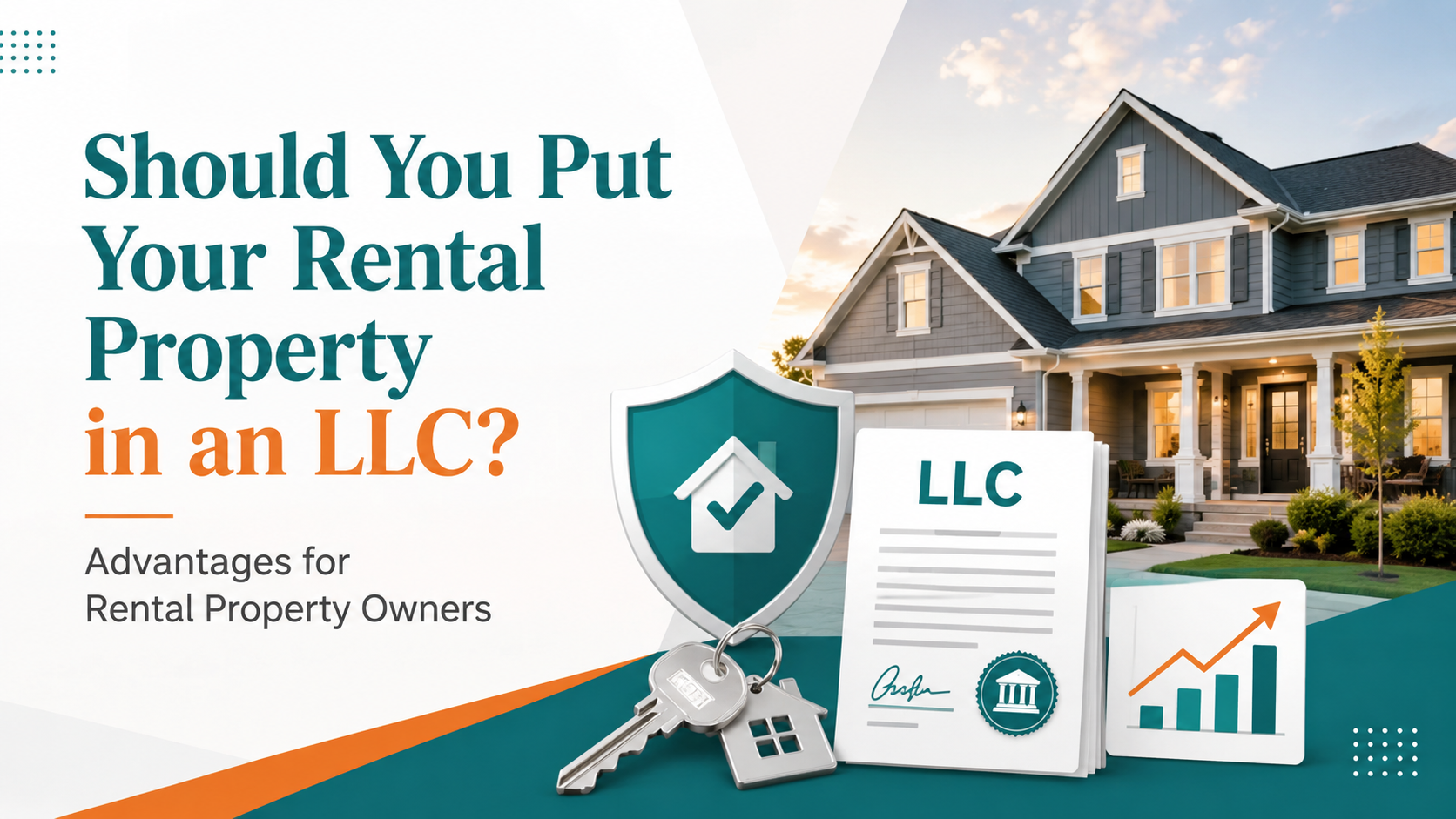
Should You Put Your Rental Property in an LLC?
If you own a rental property, you have probably heard another investor say something along the lines of:
“You need to put that property in an LLC.”
Limited liability companies are extremely common in real estate investing, and there are some good reasons for that. An LLC can help create separation between a rental property and an owner's personal affairs, provide a more organized ownership structure, and make it easier to treat a rental like the business it really is.
But simply creating an LLC does not automatically eliminate every risk associated with owning rental property.
Before transferring a property into an LLC, rental owners should understand both the potential advantages and the practical issues that come along with it.
1. An LLC Can Help Separate Business Liabilities From Personal Assets
This is probably the biggest reason rental property owners consider an LLC.
Under Florida law, a debt, obligation, or liability of an LLC is generally the obligation of the company, and a member or manager is not personally liable for that obligation solely because they are a member or manager of the LLC.
Imagine, for example, that a tenant or visitor is seriously injured at a rental property and files a lawsuit.
If the property is owned personally, the individual owner may potentially be named directly in the lawsuit. Proper ownership through an LLC can create another layer of separation between the rental business and the owner's personal finances.
That doesn't mean an LLC makes you lawsuit-proof.
Owners can still potentially face personal liability based on their own actions, guarantees, negligence, improper conduct, or circumstances in which the legal separation between the owner and LLC is not respected.
That is also why an LLC should never be considered a substitute for good landlord insurance and appropriate liability coverage.
Think of an LLC as one layer of a larger risk-management strategy.
2. It Helps You Treat Your Rental Property Like a Business
Rental properties sometimes start casually.
An owner buys a house, moves out several years later, keeps it as a rental, deposits the rent into a personal checking account, pays expenses from another account, and before long everything is mixed together.
An LLC can encourage a much cleaner business structure.
That may include:
- A dedicated bank account
- Separate bookkeeping
- Rental income paid to the appropriate entity
- Vendor expenses paid by the entity
- Contracts and leases identifying the proper ownership
- Insurance written correctly for the ownership structure
- Better documentation of rental-related income and expenses
This becomes increasingly valuable as an investor begins acquiring additional properties.
Instead of thinking:
“I own a house that I rent out.”
The mindset becomes:
“I operate a rental property business.”
That distinction can encourage much better recordkeeping and risk-management practices.
3. An LLC Can Make Multiple Rental Properties Easier to Organize
As a real estate portfolio grows, ownership structure becomes increasingly important.
An investor with three, five, ten, or twenty rental properties has significantly more exposure than someone casually renting one former residence.
Some investors therefore establish separate LLCs for different properties or groups of properties.
Why?
Because separating properties may help prevent a liability involving one property from becoming a liability of an entity holding an investor's entire portfolio.
For example, rather than placing five rental homes into Smith Properties LLC, an investor might discuss with an attorney whether separate entities or another ownership structure would provide better separation.
There are additional costs and administrative requirements associated with multiple entities, so this isn't automatically the right approach for everyone.
But as a portfolio grows, it is certainly a conversation worth having with an attorney and tax professional.
4. An LLC Can Provide Ownership Flexibility
LLCs can also make it easier to define how an investment is owned and managed.
This can be particularly helpful when:
- Spouses own investment property together
- Family members invest together
- Business partners purchase rental properties
- Multiple investors contribute capital
- An investor is planning for long-term succession or estate planning
The LLC's governing documents can establish ownership interests and management responsibilities rather than relying solely on the names appearing on a property's deed.
For investors planning to own real estate for decades or eventually transfer control to family members, having an organized ownership structure can become increasingly important.
An attorney should help determine whether an LLC is the appropriate structure for those goals.
5. A Single-Member LLC Doesn't Necessarily Mean a Completely Different Tax Return
One concern we sometimes hear is:
“If I create an LLC, aren't my taxes going to become much more complicated?”
Not necessarily.
For federal income-tax purposes, the IRS generally treats a single-member LLC as a disregarded entity unless the LLC elects to be treated differently.
In other words, creating a single-member LLC doesn't automatically mean the rental has to file a separate federal corporate income-tax return.
Multi-member LLCs and LLCs making other tax elections can be treated differently.
And this is an important distinction:
Creating an LLC does not automatically create a tax savings.
The primary reason many landlords consider LLCs is legal and organizational structure, not because adding the letters “LLC” to the property's ownership automatically reduces taxes.
Always discuss the tax implications with a CPA or qualified tax professional before choosing an entity structure.
6. It Can Create a More Professional Separation Between You and the Tenant
There's another benefit that isn't necessarily legal or tax related.
Professional rental ownership should have clearly defined boundaries.
The tenant is renting from a rental business—not borrowing somebody's personal house.
When properly structured, an LLC can reinforce that separation.
The lease, property management agreement, insurance, bank accounts, accounting records, vendor agreements, and property ownership can all identify the rental as an investment operation.
That professional separation can be particularly helpful for owners who previously managed their rental themselves and had tenants communicating directly with them about every repair, payment, or disagreement.
Of course, hiring a professional property management company creates another significant layer between an owner and the day-to-day operation of the rental.
But Don't Transfer Your Property Into an LLC Without Doing Your Homework
This is where owners need to be careful.
If you already own the property personally, moving it into an LLC usually involves transferring title.
That isn't something we recommend doing simply because someone on Facebook, TikTok, or at a real estate meetup said you should.
There are several things to investigate first.
Check Your Mortgage
If the property has a mortgage, review the loan documents and speak with the lender and your attorney before transferring ownership.
Federal law protects certain types of residential property transfers from enforcement of due-on-sale clauses, but transfers into an LLC are not simply a universal protected category under the statutory list of exemptions.
Don't assume that because you remain the owner of the LLC, your lender automatically considers the transfer acceptable.
Check Your Insurance
Your insurance company needs to know who owns the property.
If title changes from you individually to an LLC, speak with your insurance professional to make sure the ownership entity, landlord policy, liability coverage, and any umbrella coverage are structured correctly.
An LLC with incorrectly structured insurance is not a risk-management strategy we would recommend.
Consider Transfer and Recording Costs
Florida can impose documentary stamp tax on documents transferring interests in Florida real estate, and the amount can depend on the consideration involved in the transaction.
Mortgage or other encumbrances can potentially factor into the consideration for certain transfers.
That means transferring a mortgaged rental property into an LLC can have consequences that are very different from transferring an unencumbered property.
This is another reason an attorney or tax professional should review the transaction before a deed is recorded.
Make Sure the LLC Is Actually Maintained
Creating an LLC and forgetting about it defeats much of the purpose.
If you're going to operate through an entity, operate through the entity.
Keep appropriate records. Maintain separate finances. Execute documents correctly. Keep the company active and compliant. Make sure leases, management agreements, insurance, banking, and other records reflect the correct ownership.
The goal is legitimate separation—not simply registering an LLC name and continuing to operate everything exactly as before.
So, Does Every Rental Property Need an LLC?
No.
There isn't a universal rule saying every landlord should own every rental property through an LLC.
Consider two owners:
Owner A has one rental property with substantial liability insurance, a mortgage with ownership restrictions, and relatively little equity.
Owner B owns eight rental properties, has substantial equity, intends to purchase additional properties, and wants to build a long-term investment portfolio.
Those owners may receive very different advice from their attorneys and CPAs.
Your ideal structure can depend on:
- Number of rental properties
- Property equity
- Mortgage terms
- Insurance coverage
- Personal assets
- Business partners
- Estate-planning goals
- Tax considerations
- Long-term investment strategy
The bigger question shouldn't necessarily be:
“Do I need an LLC?”
It should be:
“Is my rental property ownership structured appropriately for the amount of risk I'm taking?”
That's a much better conversation.
An LLC Is Only One Part of Protecting a Rental Investment
Owning a rental property always involves some level of risk.
An LLC can potentially provide an important layer of protection, but there are many other pieces of the puzzle.
A strong rental-risk strategy can also include:
Proper insurance coverage
Make sure you have appropriate landlord and liability coverage.
A professionally written lease
Your lease should clearly establish responsibilities, expectations, and protections.
Consistent tenant screening
Preventing a bad tenancy is usually much easier than dealing with one after move-in.
Property inspections
Problems discovered early are frequently less expensive than problems ignored for months.
Maintenance documentation
Document tenant reports, repair requests, vendor work, inspections, and completed repairs.
Proper notices and procedures
Landlord-tenant laws establish specific requirements that owners need to follow.
Professional property management
Having established systems for leasing, rent collection, maintenance, documentation, inspections, renewals, and tenant communication can substantially reduce the chaos associated with owning rental property.
At Elliott & Eijo Group, we believe protecting a rental investment involves much more than simply finding a tenant and collecting rent.
It's about creating systems around the property that help reduce unnecessary risk while protecting the owner's investment.
Thinking About Putting Your Rental Into an LLC?
Start by speaking with a qualified Florida real estate attorney and tax professional.
They can review your property, mortgage, existing ownership, insurance, tax situation, and long-term objectives and help determine whether an LLC—or another ownership structure—is appropriate for you.
And if you'd like to learn more about how Elliott & Eijo Group helps rental property owners protect and manage their investments, we'd be happy to talk.
Elliott & Eijo Group at S&D Real Estate Services, LLC
(863) 333-5161
This article is provided for general educational and informational purposes only and is not intended as legal, tax, insurance, financial, or accounting advice. Laws, lending requirements, insurance requirements, and individual circumstances vary. Consult a qualified attorney, CPA, lender, and insurance professional before transferring real property or selecting an ownership structure.