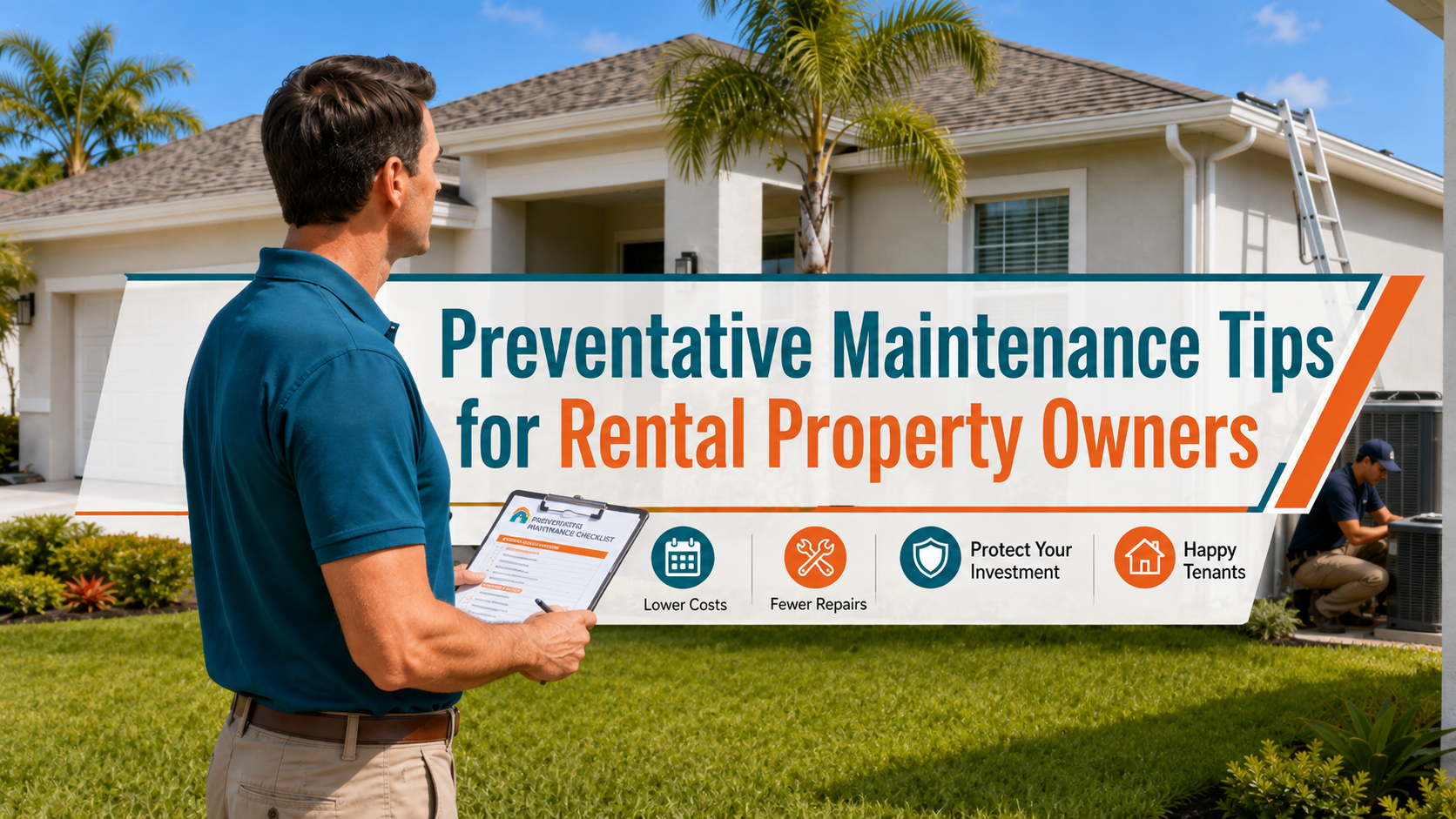
Owning a rental property is a long-term investment, but protecting that investment requires more than simply responding when something breaks.
Some of the most expensive repairs we see in rental properties don’t happen overnight. They begin as small, inexpensive maintenance issues that are overlooked for months, or even years, until they turn into major repairs.
A clogged gutter can contribute to wood rot. A small plumbing leak can become water damage and mold. An air-conditioning system that isn't maintained can fail during the hottest part of summer.
That’s why preventative maintenance should be part of every rental property owner's investment strategy.
Here are some of the most important items rental property owners should regularly monitor.
1. HVAC Maintenance and Air Filters
In Florida, your air-conditioning system is one of the hardest-working—and most expensive—systems in the home.
Dirty filters restrict airflow and force the HVAC system to work harder. Over time, this can contribute to higher utility bills, frozen evaporator coils, excessive condensation, poor indoor air quality, and premature equipment failure.
Owners should also have the HVAC system professionally serviced periodically so technicians can inspect items such as:
* Condensate drain lines
* Evaporator and condenser coils
* Refrigerant levels
* Electrical components
* Blower motors
* Ductwork and airflow
A clogged condensate line may sound insignificant, but the resulting water backup can cause ceiling, wall, flooring, and cabinet damage.
Preventing that problem is considerably less expensive than repairing it.
2. Roofs, Gutters, and Drainage
Your roof doesn't need to be leaking into the living room before it deserves attention.
Rental property owners should periodically inspect the roof for damaged or missing shingles, deteriorated flashing, exposed fasteners, debris accumulation, and other signs of wear.
Gutters and downspouts should also remain clear.
When gutters become clogged, water can overflow against fascia boards, soffits, siding, and foundations. Over time, what started as a pile of leaves can contribute to wood rot, moisture intrusion, and much more expensive repairs.
It is equally important to make sure water drains away from the home rather than pooling against the foundation.
3. Trees, Bushes, and Vegetation
Landscaping isn't just about curb appeal.
Tree limbs hanging over a roof can damage shingles, clog gutters, rub against the structure, or fall during a storm. Bushes growing directly against the house can trap moisture and make it easier for insects and pests to access the property.
Owners should periodically evaluate:
* Trees near the house or roof
* Dead or damaged limbs
* Bushes touching the structure
* Vegetation around outdoor HVAC equipment
* Drainage areas
* Fence lines
* Irrigation systems
Keeping vegetation under control can help protect the roof, siding, HVAC system, fencing, and foundation.
4. Plumbing Leaks
Water is one of the biggest enemies of a rental property.
A slow leak underneath a sink may go unnoticed for months. By the time someone discovers it, the cabinet may be damaged, flooring may be affected, and moisture may have created conditions for microbial growth.
Periodically inspect:
* Under sinks
* Around toilets
* Around tubs and showers
* Washing machine connections
* Refrigerator water lines
* Water heaters
* Exterior hose bibs
Pay particular attention to staining, swollen cabinets, soft drywall, musty odors, corrosion, or unexplained moisture.
The goal is to find a $100 problem before it becomes a $5,000 problem.
5. Caulking and Sealing Wet Areas
Caulk isn't exciting, but it does an important job.
Deteriorated caulk around tubs, showers, sinks, backsplashes, and windows can allow water to reach areas it was never intended to reach.
During property inspections, owners should look for cracked, missing, separating, or deteriorated caulking.
Replacing caulk is inexpensive.
Replacing rotten drywall, subflooring, trim, or cabinetry isn't.
6. Water Heater Maintenance
Water heaters are another item that can quietly create significant damage.
Owners should periodically check for:
* Corrosion
* Rust
* Water around the base
* Deteriorating supply lines
* Improper drain pans
* Problems with discharge piping
* Signs the unit is approaching the end of its useful life
If a water heater is installed inside the home or attic, a failure can create substantial water damage.
Knowing the approximate age and condition of the equipment gives an owner an opportunity to budget for replacement rather than waiting for an emergency.
7. Dryer Vents
Dryer vents are often forgotten.
Lint buildup can reduce dryer efficiency and, more importantly, create a potential fire hazard.
The vent should terminate properly outside the home and be periodically inspected and cleaned, particularly when the vent run is long or has several bends.
This is a relatively inexpensive preventative maintenance item with potentially significant benefits.
8. Doors, Windows, and Exterior Seals
Florida's heat, humidity, rain, and storms can be hard on exterior building components.
Inspect weatherstripping, door seals, window caulking, exterior penetrations, and deteriorated trim.
Even small openings can allow water, insects, and humid outside air into the home.
Catching deteriorated seals early is typically simple and inexpensive.
Ignoring them can lead to damaged drywall, trim, flooring, and other building materials.
9. Smoke Detectors and Safety Equipment
Smoke alarms and carbon monoxide detectors, where applicable, should be tested periodically and replaced according to manufacturer recommendations.
Other safety items worth checking include:
* GFCI outlets
* Handrails
* Exterior lighting
* Stairways
* Loose decking
* Trip hazards
* Garage door safety sensors
* Pool barriers and gates, when applicable
Preventative maintenance isn't only about protecting the building. It is also about maintaining a safe home for the people living there.
10. Pest and Termite Prevention
Waiting until there is obvious termite damage is rarely the best strategy.
Florida properties are particularly susceptible to termites, ants, roaches, rodents, and other pests.
Owners should pay attention to signs such as wood deterioration, mud tubes, droppings, insect activity, damaged screens, and openings around plumbing or utility penetrations.
Regular pest and termite inspections can identify activity before significant structural damage occurs.
11. Irrigation and Exterior Water
A broken sprinkler head might seem minor until it sprays against the house every morning for six months.
Irrigation systems should be checked for:
* Broken sprinkler heads
* Water spraying against the structure
* Excessive watering
* Leaking valves
* Dead landscaping
* Poor drainage
* Overspray onto fences, siding, or driveways
Constant moisture against a building can eventually contribute to staining, deterioration, and moisture-related problems.
Don't Leave Everything to the Tenant
One of the biggest mistakes rental property owners can make is assuming the tenant will identify and report every developing maintenance problem.
Good tenants can still miss things.
They may not recognize that a small water stain matters. They may not notice deteriorating roof flashing. They aren't climbing into the attic to inspect ductwork, checking the exterior for drainage problems, or evaluating whether a tree limb is damaging the roof.
That is one reason periodic property inspections are so important.
A good inspection isn't simply about determining whether the tenant is taking care of the property. It should also help identify maintenance issues the owner needs to address.
Preventative Maintenance Is an Investment, Not an Expense
There will always be maintenance expenses associated with owning rental property.
The question is whether you want to address problems when they are small—or after they become emergencies.
Spending a few hundred dollars trimming trees, servicing an HVAC system, clearing a drain line, replacing deteriorated caulk, or repairing a minor plumbing leak may prevent thousands of dollars in future repairs.
It can also help extend the useful life of expensive components such as your roof, air-conditioning system, flooring, cabinetry, and appliances.
A Simple Rule for Rental Property Owners
Don't wait for something to fail before you pay attention to it.
A successful preventative maintenance program should include regular property inspections, seasonal maintenance, professional servicing of major systems, and a process for quickly addressing issues when they're discovered.
At Elliott & Eijo Group, preventative maintenance is an important part of how we approach professional property management. Our goal isn't simply to respond when something breaks. It's to help identify potential problems early, protect the condition of the property, and help our owners avoid unnecessary expenses whenever possible.
If you're a rental property owner and would like to learn more about how professional property management can help protect your investment, contact the Elliott & Eijo Group at S&D Real Estate Services, LLC.
Protect the property today so you're not paying for the problem tomorrow.
By Elliott & Eijo Real Estate Group - Monday, August 10, 2026
Author