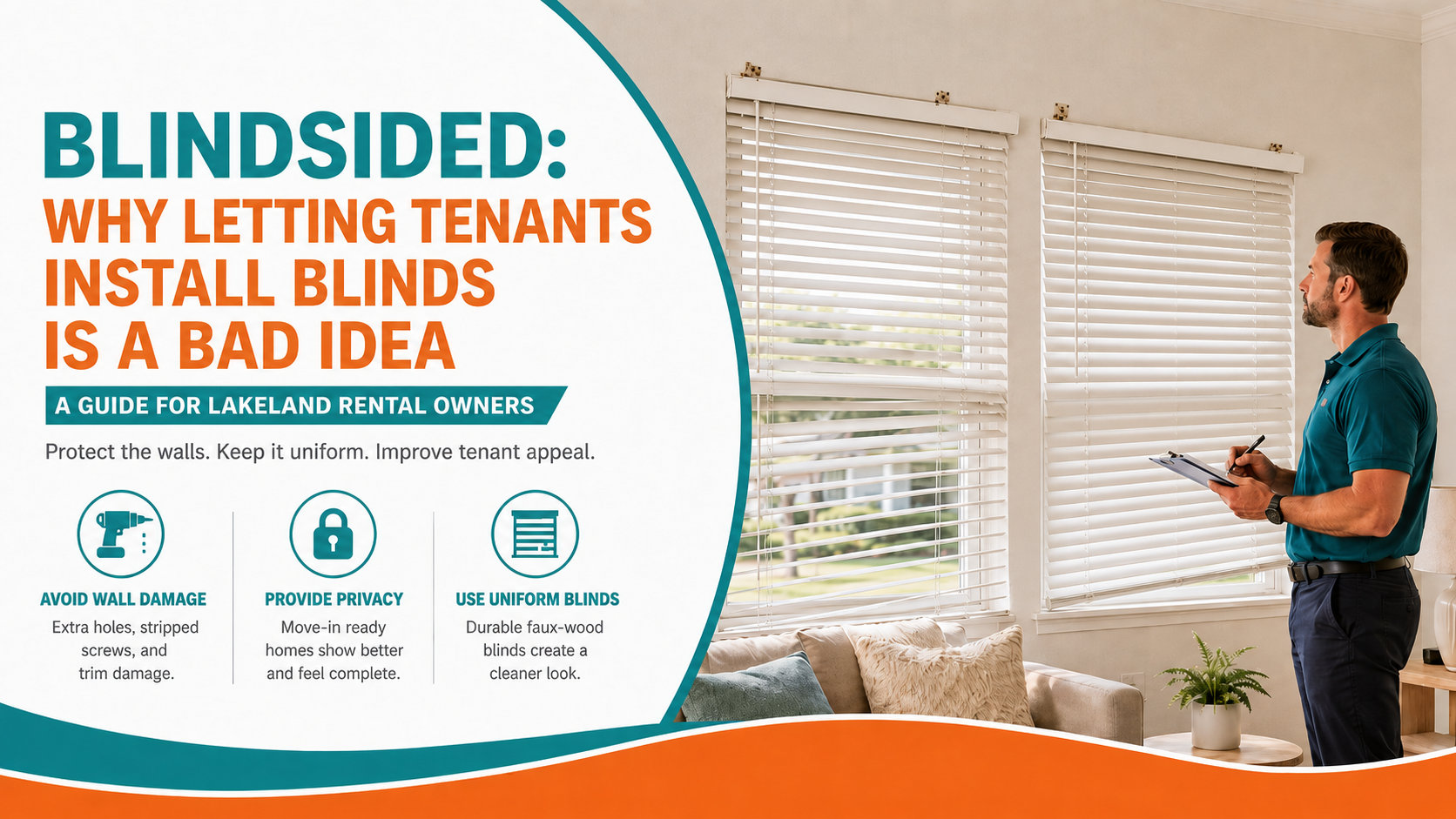
Blindsided: Why Letting Tenants Install Blinds Is a Bad Idea
As one of the top Polk County property managers, we’ve seen it all — and one mistake that costs owners time and money is letting tenants install their own blinds.
On the surface, it may not seem like a big deal. But blinds are one of those small details that can quickly turn into big problems when they are not handled correctly.
The Hidden Costs of Tenant-Installed Blinds
Letting tenants choose and install their own blinds can create unnecessary damage, inconsistent appearances, and avoidable move-out expenses.
Unwanted Holes and Wall Damage
Tenants often don’t have the right tools or experience to install blinds correctly. This can lead to extra holes, stripped screws, damaged drywall, and unnecessary trim repairs.
Sloppy Installations
Crooked, loose, or poorly mounted blinds not only look unprofessional, but they also break faster. A bad installation can make a room — and the entire property — feel less appealing to future tenants.
Move-Out Surprises
Many tenants either leave their blinds behind or take them down entirely, leaving bare windows and wall damage. Either way, the owner often ends up paying for repairs and replacements.
Why Owners Should Always Provide Blinds
Providing blinds upfront gives owners better control over quality, appearance, and accountability.
Attracting Quality Tenants
Good tenants want a move-in ready home. They don’t want to spend money on blinds they may not get to keep. By providing blinds, you show that your property is well cared for, making it more attractive to long-term renters.
Privacy and Comfort
In the Florida heat, blinds are more than cosmetic. They help keep homes cooler, provide privacy, and make the home feel more comfortable from the first showing.
Clear Responsibility for Damage
When blinds are supplied by the property owner, responsibility is much clearer. If the tenant damages them beyond normal wear and tear, the tenant can be held accountable.
Choosing the Right Blinds
As experienced property managers in Polk County, we recommend choosing blinds that balance durability, appearance, and long-term cost.
Mini Blinds
Pros: Inexpensive and easy to replace.
Cons: Break easily, look cheap, and usually do not last as long in rental homes.
Faux Wood Blinds: Best Choice
Pros: Durable, stylish, and create a clean, uniform look throughout the home.
Cons: Slightly higher upfront cost, but usually worth it for longevity, appearance, and tenant appeal.
Curtains
Curtains can be acceptable in some cases, but they are highly personal. The color, style, or pattern you choose might not suit the tenant’s taste, and they often wear out quickly.
In most rental homes, blinds are the better long-term option.
Uniformity Matters
Consistency is key. Mixing blinds — cheap in one room, nicer in another — can make a home look mismatched and lower its appeal.
A Uniform Window Treatment Plan Helps:
- Create a cleaner, more professional look.
- Improve showing appeal.
- Reduce tenant complaints.
- Make future replacements easier to manage.
- Protect the long-term value of the rental home.
A clean, consistent look across the property enhances the home’s value and helps attract the best tenants.
Final Word
Blinds might seem like a minor detail, but they play a major role in property management. By installing durable, uniform blinds upfront, owners avoid unnecessary repair costs, attract better tenants, and maintain the long-term value of their rental homes.
As top Polk County property managers, we know: when it comes to blinds, you really do get what you pay for.
Need Help Preparing Your Rental Home?
Elliott & Eijo Group helps owners make smart, cost-effective decisions that protect their properties and attract quality tenants.
Visit MyLakelandHome.com