20 Questions to Ask Before Hiring a Property Manager
Hiring a property manager is one of the most important decisions you can make as a rental property owner.
The right property manager can help protect your investment, reduce vacancy, screen tenants properly, coordinate maintenance, provide clear owner reporting, and help your rental property perform as a long-term asset.
The wrong property manager, however, can create hidden costs, poor communication, weak tenant placement, maintenance delays, compliance issues, and unnecessary stress.
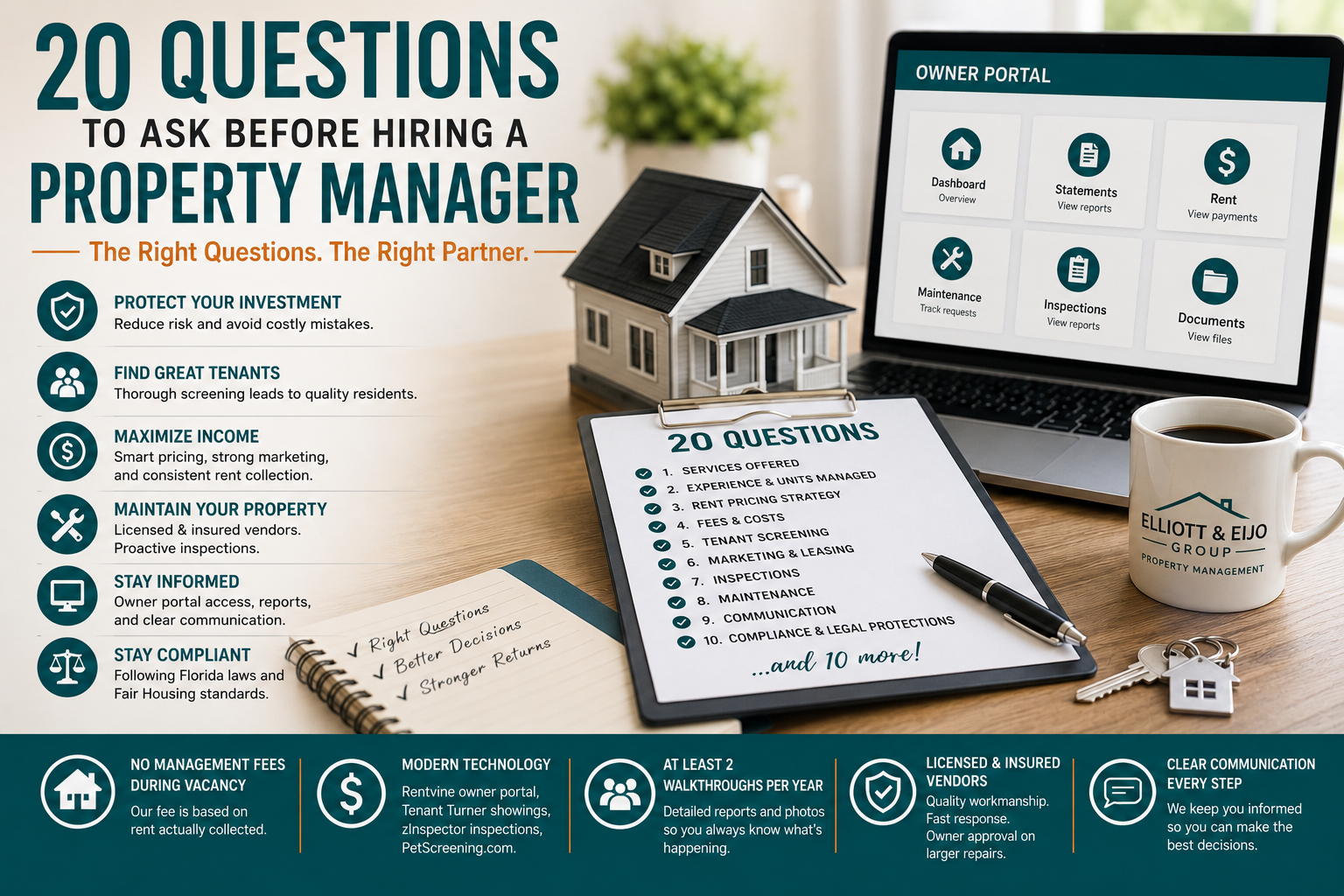
Before signing a management agreement, here are 20 important questions every rental owner should ask.
1. What Services Do You Offer?
A strong property management company should do more than collect rent. You want a team that can market, lease, manage, inspect, maintain, document, and protect your property.
Ask Whether They Handle:
- Marketing and advertising
- Tenant placement
- Tenant screening
- Lease preparation and enforcement
- Rent collection
- Maintenance coordination
- Routine walkthrough inspections
- Owner statements and reporting
- Move-out documentation
- Security deposit claim support
The goal is to find a company that can manage the full rental lifecycle, not just one small piece of it.
2. How Many Rental Units Do You Manage?
This helps you understand the size, experience, and structure of the company.
Too few rental units may indicate limited experience or weak systems. Too many units may mean owners get lost in the shuffle. The right company should have enough volume to support proven systems, staff, vendors, and experience — while still providing personal service and accountability.
What You’re Really Asking
Do they have the systems, staff, and experience to manage your property properly without treating you like just another number?
3. What Experience Does the Company Owner Have Managing Rentals?
Some property management company owners have never personally managed rental property. That matters.
Leadership experience affects company policies, team training, maintenance standards, tenant expectations, lease enforcement, and owner communication.
Experienced leadership usually creates better systems and better outcomes for owners.
4. How Do You Determine the Rent Amount?
Pricing a rental property correctly is one of the most important parts of reducing vacancy and maximizing return.
A good property manager should not guess. They should complete a rental market analysis using comparable available rentals, recently leased properties, property condition, location, amenities, and current market demand.
Pricing Should Consider:
- Nearby rental competition
- Recently leased comparable homes
- Property condition
- Pools, fenced yards, garages, and upgrades
- HOA restrictions
- Pet policies
- Seasonal leasing trends
- Current tenant demand
The right rental price helps your property lease faster while protecting your long-term income.
5. Are You an Active Real Estate Investor in This Market?
A property manager who invests in the same market often has a better understanding of owner concerns.
They understand cash flow, vacancy loss, maintenance costs, insurance, taxes, rent increases, tenant quality, and long-term value because they deal with similar issues themselves.
Investor Perspective Matters
A property manager should understand that your rental property is not just a unit — it is an investment that needs to be protected and managed strategically.
6. Under What Conditions Can I Cancel My Management Agreement?
Never sign a management agreement without understanding how to get out of it.
Ask These Questions Before Signing:
- Is there a cancellation fee?
- How much notice is required?
- Are there penalties for leaving?
- What happens if I sell the property?
- What happens if I am unhappy with the service?
A confident property manager should earn your business through service, not trap you in an agreement that is difficult to leave.
7. What Are the Management Fees?
Property management fees vary, so owners need to understand exactly how they are charged.
Some companies charge a flat monthly rate. Others charge a percentage of rent collected. Some charge additional fees for leasing, renewals, inspections, maintenance coordination, or administrative work.
Why Collected Rent Matters
A fee based on rent actually collected helps align the property manager’s interests with the owner’s. If rent is not collected, the manager should not be rewarded as if everything is performing properly.
8. Are There Fees When the Property Has No Tenant?
This is one of the most important fee questions to ask.
Some companies continue charging monthly management fees even when the property is vacant. That means the owner is paying while no rent is coming in.
Our Practice
At Elliott & Eijo Group, our monthly management fee is based on actual rent collected. If your property is vacant and no rent is being collected, you are not paying a monthly management fee.
This keeps the focus where it belongs: reducing vacancy, placing a qualified tenant, and getting the property performing again.
9. What Miscellaneous Fees Could I Be Charged?
A low management fee can look attractive at first — until hidden fees start appearing.
Ask About Fees For:
- Leasing
- Lease renewals
- Inspections
- Maintenance coordination
- Bill pay
- Administrative work
- Notices
- Technology
- Postage
- Photography
- Marketing
- Vacancy periods
- Owner statements
The cheapest company is not always the least expensive. Transparency matters.
10. Do You Offer Direct Deposit for Owners?
Owner disbursements should be simple, modern, and efficient.
A professional property management company should be able to send owner payments electronically through direct deposit or ACH. This saves time, reduces delays, and makes accounting cleaner.
Modern Owner Payments
Owners should not have to wait on paper checks or chase down basic accounting information. Electronic deposits and owner portals are now standard expectations.
11. How Do You Collect Rent from Tenants?
Rent collection should be structured, consistent, and professional.
Ask whether tenants can pay online, whether late fees are enforced consistently, how delinquent accounts are handled, and what the process is when rent is not paid.
A Strong Rent Collection Process Should Include:
- Online tenant payment options
- Clear lease language
- Consistent late fee enforcement
- Delinquency follow-up
- Documentation of balances and payment activity
- A defined escalation process when rent is not paid
A professional rent collection process protects cash flow and reduces emotional owner-tenant conversations.
12. Do You Conduct Property Inspections?
Your property is at risk if no one is checking on it.
Routine walkthrough inspections help identify maintenance issues, tenant neglect, unauthorized pets, unauthorized occupants, lease violations, and safety concerns before they become bigger problems.
Our Practice
At Elliott & Eijo Group, we conduct at least two walkthrough inspections per year and document the condition of the property with detailed reports and photos using zInspector.
Good inspections give owners visibility and help protect the long-term condition of the home.
13. Do You Offer a Tenant Warranty?
A tenant warranty can provide additional protection if a tenant does not fulfill the lease.
For example, if a tenant breaks the lease early, some property managers may reduce or prorate the next leasing fee. This shows confidence in their tenant placement process.
Ask What Is Covered
If a company offers a tenant warranty, ask how it works, what situations qualify, and whether the leasing fee is prorated if a tenant does not complete the lease term.
14. What Steps Do You Take to Market Properties?
Marketing a rental property should involve more than posting one basic listing online and waiting.
Strong property marketing attracts more applicants, creates better leasing options, and helps reduce vacancy.
Ask Whether Marketing Includes:
- Professional-quality photos
- Compelling listing descriptions
- Online listing syndication
- Lead follow-up
- Showing coordination
- Use of a showing scheduler such as Tenant Turner
- Clear application instructions
Good marketing does not just create views. It creates qualified applications.
15. How Long Are Your Properties Typically Vacant?
Vacancy is one of the biggest expenses rental owners face.
Ask how long properties typically sit vacant after they are rent-ready. If homes sit too long, the manager may be pricing incorrectly, marketing poorly, or failing to follow up with leads.
Fast Is Not Always Better
If a property leases instantly every time, it may also be worth asking whether rent is being priced too low. The goal is not just fast leasing — it is smart leasing.
16. What Are Your Income and Screening Requirements?
Tenant screening is one of the most important parts of property management.
A property manager should have written rental criteria and apply screening standards consistently and fairly.
Screening Should Review:
- Income
- Employment
- Credit history
- Rental history
- Eviction history
- Landlord verification
- Background information where legally permitted
- Pet screening through a system such as PetScreening.com
Screening should reduce risk while remaining consistent with Fair Housing requirements and written rental criteria.
17. What Control Do I Have Over the Lease Agreement?
Owners should understand what lease is being used and how much input they have.
A professional property manager should have a strong lease agreement designed to protect the property, the owner, and the management process.
Consistency Matters
Too many custom lease changes can create confusion or weaken consistency. However, if an owner has a specific concern, it should be discussed before the lease is signed.
18. How Often Will I Receive Updates on My Property or Portfolio?
Communication matters.
Owners should receive clear updates about rent collection, maintenance, inspections, vacancies, lease renewals, and financial performance.
Our Practice
Elliott & Eijo Group uses Rentvine for property management software, which supports owner portal access, statements, maintenance tracking, lease records, and organized reporting.
Your rental property is a business. You should have access to the information you need to make smart decisions.
19. How Do You Handle Maintenance and Vendor Oversight?
Maintenance is one of the biggest areas where a property manager proves their value.
Poor maintenance coordination can lead to higher costs, tenant frustration, property damage, and liability concerns. Strong maintenance systems protect the investment.
Ask These Maintenance Questions:
- Do you use licensed and insured vendors?
- How are emergencies handled?
- Do owners approve repairs over a certain amount?
- How do you prevent unnecessary service calls?
- How are completed repairs documented?
- How are tenants and owners updated?
At Elliott & Eijo Group, repairs in tenant-occupied homes are handled through qualified vendors, with an emphasis on licensed and insured professionals when required or appropriate. Our maintenance authorization threshold helps keep small repairs moving while still involving owners on larger expenses.
20. How Do You Protect Me from Legal and Compliance Issues?
Property management is not just operational — it is legal.
A property manager should understand Fair Housing requirements, Florida landlord-tenant law, security deposit handling, notices, habitability standards, lease enforcement, assistance animal requests, and proper documentation.
Compliance Reduces Risk
A strong property management company helps owners follow consistent processes, document important issues, and reduce avoidable risks connected to leasing, maintenance, notices, tenant communication, and deposit claims.
No property manager can eliminate every risk, but a professional process can help protect owners from common and costly mistakes.
Final Thoughts
Choosing a property manager should not be rushed. The company you hire will be responsible for your rental income, tenant experience, property condition, legal compliance, maintenance coordination, and long-term investment performance.
Asking the right questions upfront helps you avoid surprises later.
At Elliott & Eijo Group, we believe property management should be transparent, professional, and focused on protecting the owner’s investment.
If you are looking for property management in Lakeland, FL or the surrounding Polk County area, our team is here to help you make informed decisions and manage your property the right way.
Have Questions About Property Management?
Contact Elliott & Eijo Group today to learn how our systems, screening, inspections, maintenance coordination, and owner communication can help protect your rental property.
Visit MyLakelandHome.com