
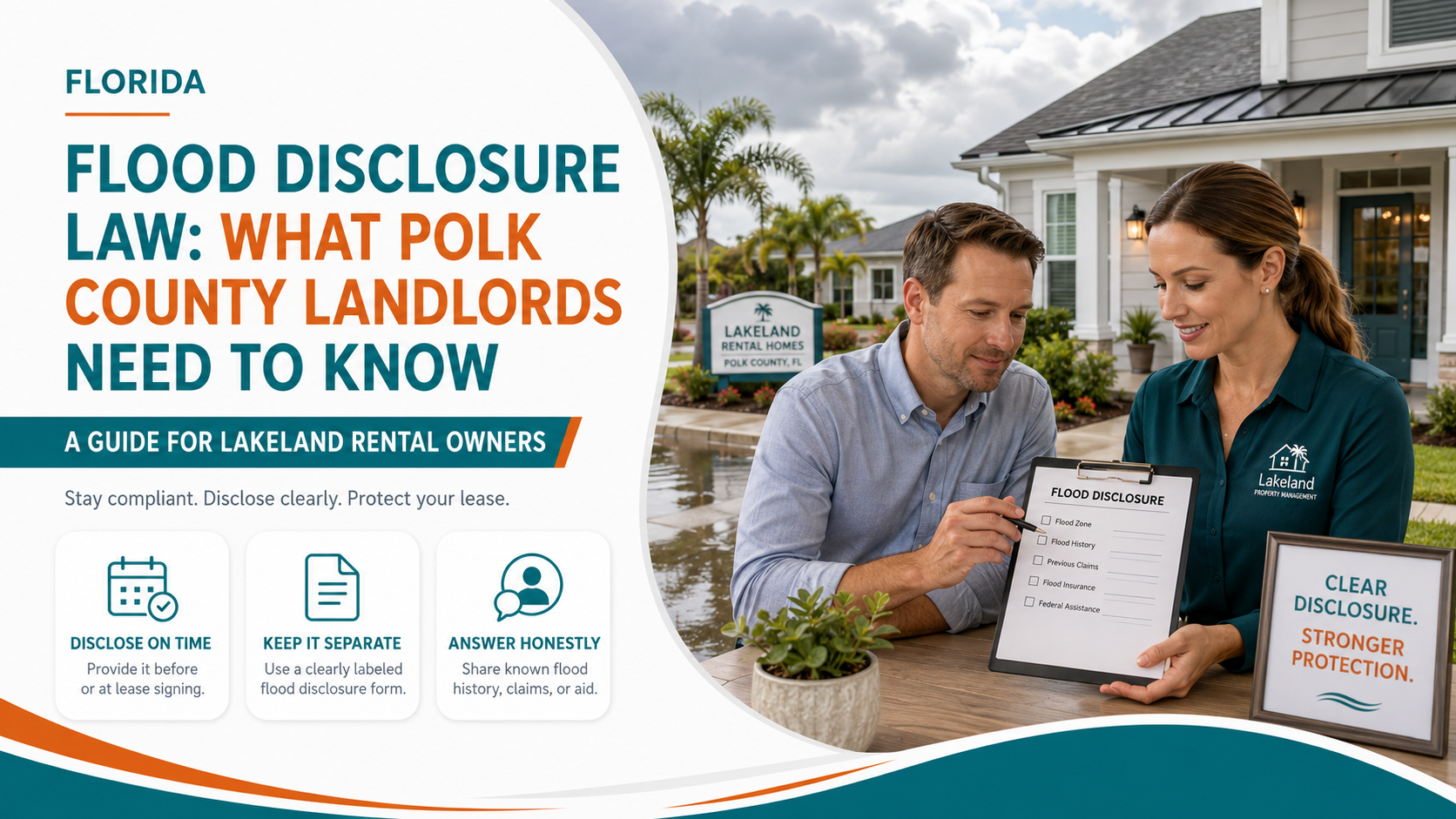
Florida’s New Flood Disclosure Law: What Polk County Landlords Need to Know
As Polk County’s best property manager, Elliott & Eijo Group is committed to keeping our owners informed about important legal updates that may affect rental property ownership.
One major change Florida landlords need to know about is the Florida Flood Disclosure Law, codified under Florida Statute 83.512. Effective October 1, 2025, this law requires landlords to provide a separate flood disclosure to prospective tenants before or at the time a qualifying residential rental agreement is executed.
This disclosure gives tenants important information about known flood history, flood-related insurance claims, and flood-related assistance before signing a lease.
What Landlords Must Do
Under Florida Statute 83.512, landlords must complete and provide a flood disclosure to prospective tenants for residential rental agreements with a term of one year or longer.
Key Requirements
- The disclosure must be provided at or before lease signing.
- It must be a separate document, not buried inside the lease.
- The disclosure must be clearly labeled as a flood disclosure.
- Landlords should keep a signed copy with the lease file.
The disclosure form asks landlords to answer important questions about the rental property’s flood history during their ownership.
The Three Main Questions Landlords Must Answer
The flood disclosure requires landlords to disclose whether they have knowledge of certain flood-related events connected to the dwelling unit.
Landlords Must Disclose:
- Whether the property has flooded during the landlord’s ownership.
- Whether the landlord has filed flood-related insurance claims.
- Whether the landlord has received flood-related federal assistance, such as FEMA aid.
The required disclosure also includes an important reminder that standard renters insurance policies do not typically cover flood damage, and tenants are encouraged to discuss separate flood insurance coverage with their insurance agent.
Why This Matters in Polk County
Flooding is not just a coastal issue. Even inland communities like Lakeland and Polk County can experience flooding from heavy rains, drainage backups, low-lying areas, and storm-related water intrusion.
This new disclosure requirement increases transparency, helps tenants make informed decisions, and gives landlords a clearer process for documenting what they know about the property.
Why Owners Should Pay Attention
A properly completed flood disclosure can help reduce confusion, support better tenant communication, and protect landlords from avoidable compliance issues.
Landlord Checklist for Compliance
To stay compliant, landlords should make the flood disclosure part of their standard leasing process.
- Use the proper disclosure form: Make sure the disclosure substantially follows the required statutory language.
- Answer honestly: Disclose what you know based on your ownership of the property.
- Provide it on time: Present the disclosure at or before lease execution.
- Keep it separate: Do not bury the disclosure inside the lease agreement.
- Get it signed: Keep a signed and dated copy for your records.
- Apply it to renewals when required: Qualifying rental agreements executed or renewed after the effective date should include the disclosure.
Risks of Non-Compliance
Failing to provide the required disclosure can create serious problems if the property later experiences flooding that causes substantial loss or damage.
Potential Consequences May Include:
- Tenant lease termination rights under certain circumstances.
- Refunding prepaid rent after the effective termination date.
- Greater legal exposure if flood history was knowingly withheld.
- Damage to tenant trust and owner reputation.
This is why proper documentation and a consistent leasing process matter. Compliance should not be handled casually or at the last minute.
Expert Perspective
“This new law isn’t just red tape — it’s about clarity and fairness. Helping tenants understand flood risks protects everyone involved — renters, landlords, and property managers alike.”
Final Thoughts
At Elliott & Eijo Group, we are committed to keeping your properties compliant and marketable. Florida’s flood disclosure law is another reminder that rental property management is about more than collecting rent — it is about protecting the owner, informing the tenant, and staying ahead of legal changes.
Working with Polk County’s best property manager means having a team that understands the details, updates the process, and helps keep your rental property moving in the right direction.
Have Questions About Florida’s Flood Disclosure Law?
Contact Elliott & Eijo Group today and we’ll help guide you through the process so your lease files stay organized, compliant, and ready.
Visit MyLakelandHome.com