
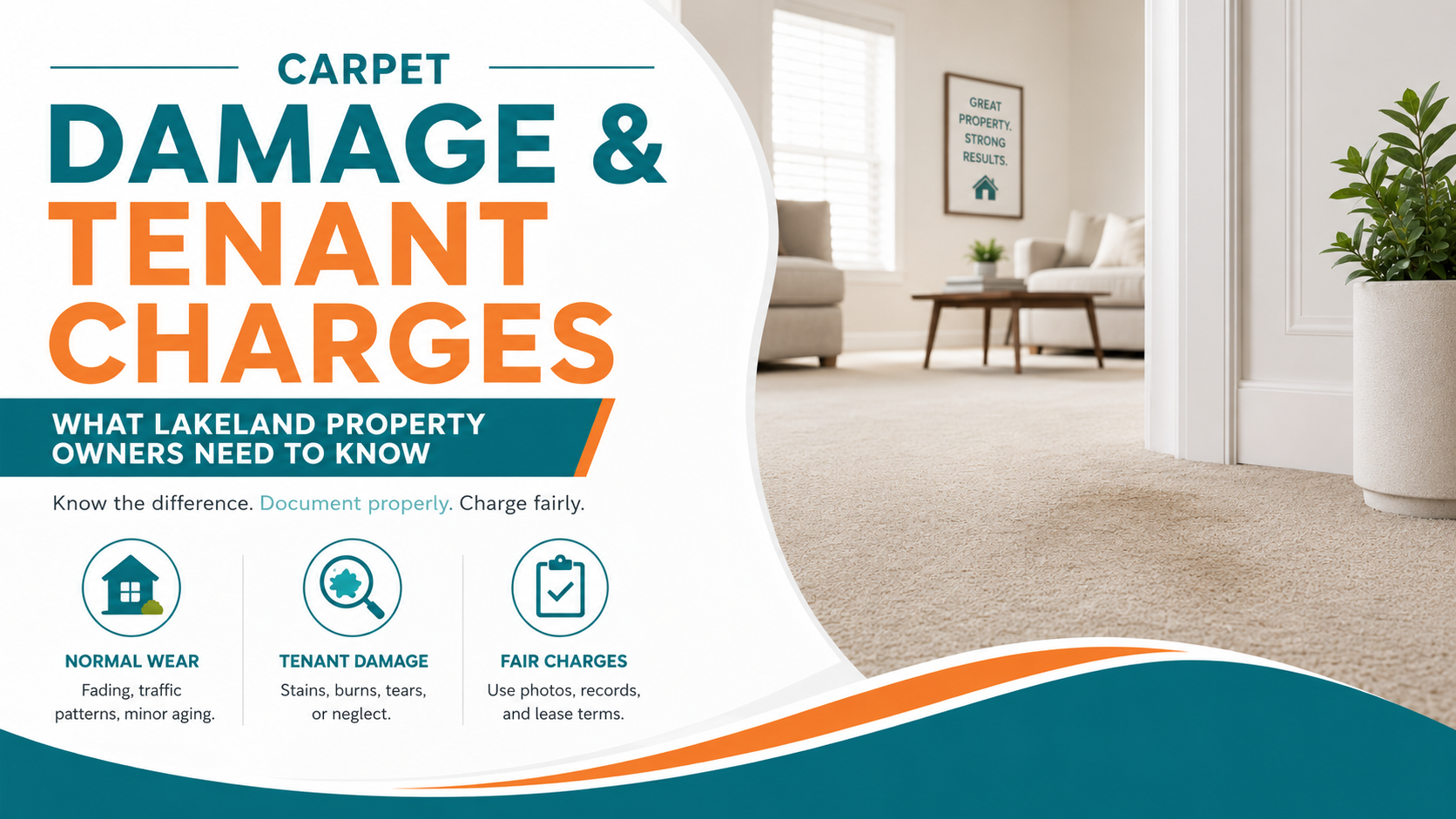
Carpet Damage and Tenant Charges: What Lakeland Property Owners Need to Know
As a leading provider of property management in Lakeland, Florida, one of the most common questions we receive from rental property owners is:
The answer depends on several factors, including the age of the carpet, the type of damage, the condition documented at move-in, and whether the issue goes beyond normal wear and tear.
Understanding Carpet Life Expectancy
Carpet in a rental property has a limited useful life. Many property management and housing references use an estimated carpet life of approximately five years as a common depreciation guideline, though the specific facts, documentation, and condition of the carpet still matter.
Why Age Matters
If carpet has already reached the end of its expected useful life, it may have little or no remaining value for reimbursement purposes. In that situation, replacing old carpet may be considered part of normal owner maintenance rather than a tenant charge.
This is why owners should not assume they can charge a tenant the full cost of carpet replacement simply because the carpet looks bad at move-out. The age and remaining value of the carpet must be considered.
What If the Carpet Is Less Than 5 Years Old?
If the carpet is newer and the damage exceeds normal wear and tear, a prorated tenant charge may be appropriate.
Example of a Prorated Carpet Charge
If carpet is 3 years old and the expected useful life is 5 years, then approximately 2 years of useful life may remain. In that case, the tenant may be responsible for a prorated portion of the replacement cost if the damage is beyond normal wear and tear.
This approach helps keep deposit claims fair, reasonable, and easier to defend if a dispute arises.
Normal Wear and Tear vs. Tenant Damage
Every rental property will experience normal wear over time. Carpet naturally fades, flattens, and wears down through ordinary use.
Examples of Normal Wear and Tear
- Fading from sunlight
- Minor fraying or matting in high-traffic areas
- Light discoloration over time
- General wear from ordinary walking and furniture placement
Damage is different. Tenant damage usually involves abuse, neglect, misuse, or conditions that go beyond ordinary living.
Examples of Excessive Carpet Damage
- Large permanent stains
- Rips, burns, or cuts
- Pet urine damage or strong pet odors
- Chewed or torn carpet from pets
- Improper cleaning or misuse that damages the carpet
Documentation Is Everything
A carpet charge is only as strong as the documentation behind it. Owners need clear evidence showing the carpet condition before the tenant moved in and after the tenant moved out.
Strong Documentation Should Include:
- Move-in inspection photos
- Move-out inspection photos
- Carpet installation date or invoice, if available
- Photos showing the specific damage
- Vendor notes or invoices supporting the repair or replacement
Without proper documentation, even a valid claim can become difficult to prove.
Why This Matters for Lakeland Landlords
As a trusted Lakeland property management company, Elliott & Eijo Group follows Florida landlord-tenant requirements and widely accepted property management standards to ensure security deposit deductions are handled fairly and professionally.
Charging tenants for items that are fully depreciated or not properly documented can create unnecessary disputes and legal risk. It can also damage the relationship between owner, tenant, and property manager.
Our Approach
We document damage thoroughly, communicate clearly with owners and tenants, and advise owners on practical maintenance planning — including when to budget for carpet cleaning, repairs, or replacement.
Planning Ahead Can Reduce Disputes
Carpet issues are easier to manage when owners plan ahead. Knowing the age of the carpet, keeping installation records, and using detailed inspections can help avoid confusion later.
Best Practices for Owners
- Keep carpet invoices and installation dates.
- Take detailed photos before every move-in.
- Use a consistent move-out inspection process.
- Separate normal wear from actual tenant damage.
- Apply prorated charges when appropriate.
- Budget for carpet replacement as part of long-term ownership.
Final Thoughts
Carpet damage and tenant charges can be tricky, but the right process makes all the difference. The key is to be fair, consistent, and well-documented.
At Elliott & Eijo Group, we help Lakeland rental property owners protect their investments while handling tenant charges and security deposit issues professionally.
If you need guidance on tenant damage, maintenance planning, or deposit policies, our Lakeland property management experts are here to help.
Need Help With Tenant Damage or Deposit Claims?
Elliott & Eijo Group provides professional property management in Lakeland, Florida, with detailed inspections, clear documentation, and practical owner guidance.
Visit MyLakelandHome.com